Walking Towards Independence, Nkolo Orthopaedics Rehabilitation Center
Duration: July 2024 – June 2027
Location: Luweero District, Uganda
Beneficiaries: Up to 600 people with disabilities and more than 3,000 indirect beneficiaries
Area of intervention: Ability in physical rehabilitation
Partner: Nkolo Orthopaedics Rehabilitation Center (NORC)
According to Uganda’s national statistics, 12.4% of the population lives with some form of disability—this means that more than 6 million people require physical rehabilitation or other types of assistance. Yet, there are only ten rehabilitation centres across the country. These facilities are often inadequate, require long and costly travel, and remain financially inaccessible for many less affluent amputees and people with disabilities.
Luweero District, located in the centre of the country and historically known as the “Luweero Triangle” due to the violent conflict of the mid-1980s, continues to carry the scars of war. Thousands of victims still live with physical impairments that require care. Today, there are around 11,350 people with physical disabilities in the district and its surroundings, but only 5.8% can access the rehabilitative services they need.
Despite the pressing demand, existing rehabilitation structures remain insufficient.
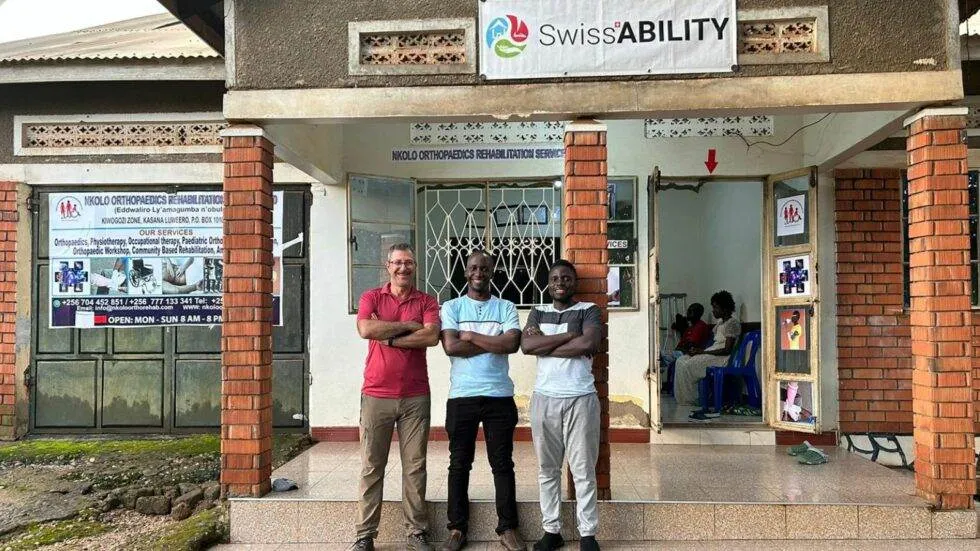
The SwissABILITY project, in partnership with the Nkolo Orthopaedics Rehabilitation Center (NORC), aims to fill this critical gap by establishing a modern rehabilitation centre in Luweero District. The facility will provide comprehensive rehabilitative services through an orthopedic workshop for the production of prosthetics and orthotics, A physiotherapy unit, an occupational therapy unit, and a speech therapy unit.
To ensure holistic care, the project also includes the construction of accommodation facilities for staff members traveling from afar, as well as patients from remote areas requiring extended treatment.
Sustainability and Innovation
The centre will be powered by solar energy, ensuring uninterrupted service delivery even during frequent power outages, while reducing operational costs and reliance on unreliable electricity.
In addition, a mobile clinic will be procured to bring rehabilitative services to rural communities, ensuring that people living far from the centre also benefit from care.
Impact
By the end of the project in 2027, this initiative will:
Provide rehabilitative services to up to 600 people with disabilities directly.
Reach more than 3,000 indirect beneficiaries through family and community-level impact.
Strengthen the capacity of local orthopedic and rehabilitation professionals.
Contribute to reducing inequalities in access to healthcare for people with disabilities in Uganda.